


For many Ghanaians, the name Kwame Dzokoto immediately brings to mind Judge Koboo, the comical character whose antics in the popular television series Efiewura entertained audiences for years.
His humour, expressive delivery and memorable screen presence made him a familiar face in Ghanaian homes. But while audiences knew him for his comic performances, Seth Kwame Dzokoto had interests and ambitions that extended well beyond acting.
He was a broadcaster, television presenter, comedian, voice-over artist, politician and scholar whose career reflected a willingness to explore different paths.
His death on Thursday, October 22, 2026, at the age of 51, following a reported collapse during a radio programme at Owass FM in Tarkwa, has brought renewed attention to the life and career of a personality who occupied several spaces in Ghana’s media and entertainment industry.
Dzokoto began his broadcasting career at Dynamite FM in Tarkwa in 1998, where he worked for about three years before moving to Skyy Power FM in Takoradi. He spent about four years at Skyy, hosting the popular mid-morning programme Odam Sokoo.
His lively presentation style and ability to connect with listeners helped establish his profile in the Sekondi-Takoradi area.
He later worked at Hello FM in Kumasi before continuing his broadcasting career in Accra.
Radio remained particularly close to his heart. In a September 2026 interview, he spoke about the unique connection presenters could establish with their audiences, even when listeners could not see them.
For someone whose public image was strongly associated with his face and comic performances, his affection for radio offered another glimpse into his passion for communication.
His television career, however, brought him national recognition.
Judge Koboo
Dzokoto became widely known for his portrayal of Judge Koboo in Efiewura, one of Ghana’s popular local television productions.
The character became a defining part of his career, helping him connect with audiences who appreciated his comic timing and distinctive performance.
Judge Koboo was more than a role for which viewers recognised him; the character became closely associated with his identity as an entertainer.
His work on Efiewura demonstrated his ability to use humour to engage audiences and established him as one of the familiar faces of local television entertainment.
Yet Dzokoto was not content to remain within the boundaries of acting.
He explored other opportunities in the media industry, including comedy and advertising voice-overs, using his voice and performance skills in different ways.
Taking Ghanaian food to television
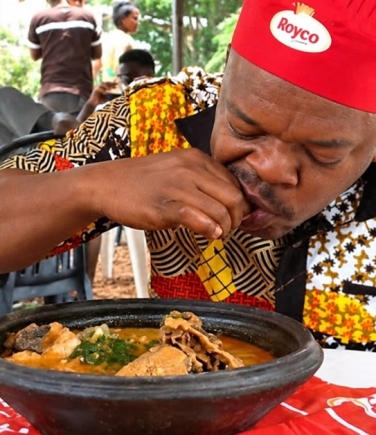
Another significant chapter in Dzokoto’s career was hosting TV3’s Edziban, a food and tourism programme that explored Ghanaian cuisine and local eateries.
The programme, which reportedly began around 2011, won the Chartered Institute of Marketing, Ghana (CIMG) Television Programme of the Year award in 2014.
Through Edziban, he took viewers on journeys into Ghana’s food culture, introducing them to different dishes and places to eat.
His presentation style brought humour and entertainment to the subject, making food exploration accessible to a broad television audience.
The programme also helped showcase Ghanaian cuisine and local dining experiences. Its industry recognition demonstrated that Dzokoto’s talents extended beyond comedy and that he could successfully host a programme with a different focus while retaining the personality audiences had come to enjoy.
Political ambition
In 2016, Dzokoto ventured into partisan politics, contesting the Tarkwa-Nsuaem parliamentary seat on the ticket of the National Democratic Congress (NDC).
His decision to seek political office marked a significant departure from television and comedy, placing him in the arena of electoral competition and public service.
He was unsuccessful in the general election, losing to the New Patriotic Party’s George Mireku Duker.
His political ambition nevertheless reflected an interest in public affairs beyond his entertainment career.
In 2017, he also announced plans to study law, explaining that he wanted to broaden his horizons and challenge perceptions that people in show business lacked intellectual depth.
He indicated at the time that he intended to reduce his acting commitments to accommodate his studies.
His interest in education continued beyond that ambition. He attributed his interest in international affairs to a radio discussion by Professor Vladimir Antwi-Danso on the Russia-Ukraine conflict, which prompted him to explore geopolitics and the interests that influence decisions made by nations.
The achievement added another dimension to his public image. The entertainer who had made audiences laugh on television had also pursued advanced studies in a field far removed from the characters that made him famous.
Even in the final weeks of his life, Dzokoto remained connected to Ghana’s creative industry.
He attended the media launch of The 70 Slate: A Cinematic Celebration of Ghana at 70, a film project involving filmmakers Shirley Frimpong-Manso and Peter Sedufia. He was also announced as part of the cast of Osumesi, one of the productions project.
His continued involvement in film and broadcasting reflected a career that remained active across different platforms.
Dzokoto’s journey was not confined to one profession or public identity. He moved between acting, radio, television presentation, voice-over work and politics.
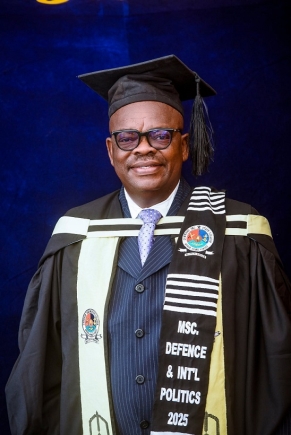
In August 2025, he graduated from the Ghana Armed Forces Command and Staff College with a Master of Science in Defence and International Politics.
The man behind the laughter
Kwame Dzokoto’s contribution to Ghanaian entertainment cannot be reduced to a single character, even though Judge Koboo remains one of his most recognisable creations.
Through Efiewura, he entertained audiences and became a familiar presence in their homes. Through Edziban, he brought Ghanaian food and local dining experiences to television screens. On radio, he connected with listeners, while his political and academic pursuits revealed ambitions that extended beyond show business.
As Ghana remembers him, the laughter he brought to television audiences will remain an enduring part of his contribution to the country’s entertainment industry.
For those who knew him primarily as Judge Koboo, his life tells a broader story - that of an entertainer who refused to be defined by one role and continued to pursue possibilities beyond the screen.
