


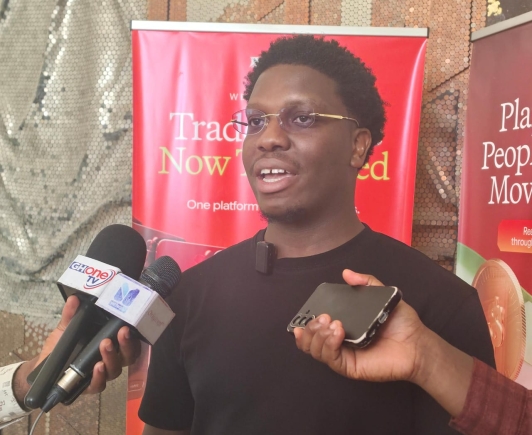
The Chief Executive Officer (CEO) of WeWire, Ebenezer Ghanney, has identified proper bookkeeping and the separation of personal and business finances as the critical first steps for African small and medium-sized enterprises to access the continent's estimated $80 billion financing gap.
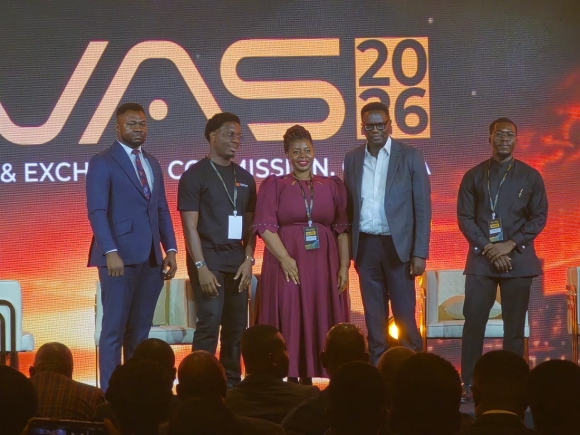
Speaking to journalists on the sidelines of the Africa Virtual Assets Summit 2026 in Accra, Mr Ghanney explained that when SMEs seek capital, investors often struggle to assess their financial health due to poor record-keeping.
"The first thing businesses in Africa need to do is proper bookkeeping. That's the first step because we see a lot of deals come to our table, and usually we want to ask them a few questions around their finances. If I can't understand your finances, I can't be able to support you in raising capital because I need to know: okay, are you profitable? How much money are you making? What are your receivables and all this?" he said.
He added that SMEs must ensure their businesses are properly registered and avoid treating personal accounts as business accounts.
Mr Ghanney explained that WeWire is using trade finance tokenisation to help SMEs overcome the structural barriers that prevent traditional fund managers from investing in them.
"Bringing that same or underwriting that SMEs products and bringing it on chain becomes now a new asset class that the farm manager can now invest in because it's a regulated by SEC asset class that they can now put money in. So the SME will go to the market to raise capital. They don't have the proper structure. We help build the structure so that they can be able to get the capital," he said.
He noted that banks often cannot support certain businesses due to collateral constraints, but WeWire bridges that gap.
"For example, banks may not support certain things that don't have the collateral to back it fully, but the collateral might be in transit. We can come in and bridge that financing gap, and then pass on the deal to the bank to now be able to support once every box has been ticked."
Addressing the widespread confusion around the term "tokenisation," Mr Ghanney explained it simply as bringing real-world asset value onto a digital format, comparing it to mobile money.
"Tokenization is basically bringing what the real asset value on to a chain or online. So we already kind of have tokenization products in Ghana, which is in the form of mobile money," he said.
He confirmed that WeWire was recently approved into the Securities and Exchange Commission's regulatory sandbox, describing it as a stamp of approval that builds investor confidence.
"It means a stamp of approval from the regulator, and the regulator is also scrutinising what we are doing. It's all in the bid to build investor confidence in the market, and also make sure that the right thing is being done," he stated.
When asked what advice he would give to the Governor of the Bank of Ghana regarding tokenisation, Mr Ghanney suggested that government securities should be the immediate priority. "Government securities is easier because there's no heavy lifting behind them, like gold. We need to make sure that we have the custody sorted out and all those things. So the easiest, quick win will be government securities because we already have the T bills. It is now just bringing the custody of the T bills; it is already there. We just have to just bring it on chain for people to be able to access it," he explained.
He dismissed the idea that digital assets pose a threat to traditional banks, describing them instead as an opportunity to expand the investment pool globally.
"Bringing it on chain makes it accessible to someone sitting in their bedroom in China can be able to buy Government of Ghana bonds. The U.S. can be able to buy it easily without coming to the Ghanaian market physically to come and open a CSD account," he said.