


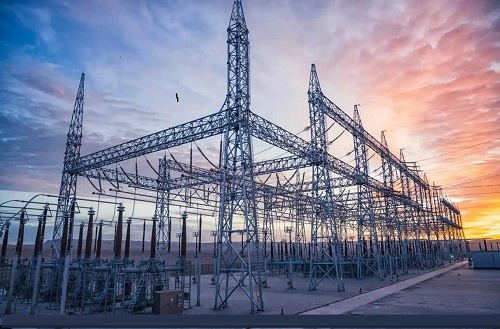
In the modern economy, a nation's energy framework is the foundational blueprint that dictates its capacity to industrialise, feed its population, educate its youth, heal its sick and compete in the global digital marketplace.
We must recognise the profound, inextricable links between national energy policy and the five pillars of our economic future: industrialisation, agriculture, health, education and digital transformation.
The difference between merely deploying capital and building real capability lies in how energy empowers these sectors.
• Industrialisation
One of the core debates in modern energy policy is the difference between "transition finance" (reducing carbon intensity) and "transformation finance" (building productive industrial capacity). For a country to industrialise, energy policy must prioritise the latter. Reliable, cost-effective power is the lifeblood of manufacturing.
Energy in Action: Consider a local garment manufacturing factory in Tema aiming to export under the African Continental Free Trade Area (AfCFTA). If the factory experiences frequent power outages, it must rely on expensive diesel generators. This drives up production costs, making the garments more expensive than imported alternatives. A transformative energy policy ensures that this factory has access to stable, affordable grid power—perhaps supplemented by localised solar microgrids—allowing it to meet export deadlines, expand operations, and hire more workers.
• Agriculture
Agriculture remains the backbone of the Ghanaian economy, but it is heavily reliant on rain-fed practices and raw material exports. Energy policy bridges subsistence farming and commercial agro-processing. Without energy, post-harvest losses remain high, and value addition remains a pipe dream.
Energy in Action: Imagine a tomato farming cooperative in Navrongo. During peak harvest, excess tomatoes rot before reaching the market in Accra because cold storage is inadequate. An integrated energy agriculture policy would incentivise the deployment of solar-powered cold storage facilities at the farm gate. Furthermore, reliable electricity allows for the establishment of a local processing plant to turn those tomatoes into paste. Energy transforms the farmer from a seller of perishable raw goods to a participant in a lucrative value chain.
• Health
In the healthcare sector, energy reliability is not an economic luxury; it is a clinical necessity. The resilience of our health systems is directly tied to the resilience of our power grid. Modern medicine relies heavily on temperature-controlled supply chains and continuous power for life-saving equipment.
Energy in Action: Picture a district hospital in a rural community. A premature baby requires an incubator, which needs uninterrupted electricity to maintain a stable temperature. At the same time, the hospital's pharmacy must keep vaccines refrigerated to remain viable.
If the national energy policy fails to prioritise stable power distribution to critical infrastructure, lives are put at risk. Conversely, a policy that mandates and funds hybrid solar-battery backup systems for all district health facilities ensures that healthcare delivery never stops when the main grid fails.
• Education
Education is the great equaliser, but energy poverty creates a stark divide in learning outcomes. As the world shifts toward STEM (Science, Technology, Engineering, and Mathematics) and digital literacy, a school without power is a school cut off from the 21st century.
Energy in Action: A junior high school student in a remote community cannot study after sunset without reliable lighting, limiting their revision time compared to peers in urban centers. Furthermore, the school cannot operate a computer lab or connect to the internet without electricity.
An energy policy that aggressively targets rural electrification—using off-grid renewable solutions where the main grid is unfeasible—directly translates into higher literacy rates, digital skills acquisition, and a more competitive future workforce.
• Digital Transformation
We often think of the digital economy as existing in the "cloud," but the cloud rests on physical infrastructure that consumes massive amounts of electricity. Data centers, telecommunication masts, and fibre-optic networks require 24/7 power to function.
Energy in Action: Mobile money has revolutionized financial inclusion in Ghana, allowing a market trader in Kumasi to instantly receive payment from a buyer in Takoradi. However, this transaction relies on telecom towers that must be constantly powered. If energy policy does not support the expansion and reliability of power to these telecom sites, network downtime increases, transactions fail, and the digital economy stalls. A forward-looking energy policy anticipates the high-power demands of tech hubs and data centers, ensuring the country positions itself as a digital leader in West Africa.
• A holistic vision for growth
The narrative of national development cannot be written without a robust energy policy acting as the pen. Whether it is the hum of a factory floor, the cooling of a vaccine, the glow of a student's computer screen, or the ping of a digital payment, energy is the invisible thread connecting every sector of our economy.
As Ghana engages with international frameworks, energy investments are not just about reducing carbon footprints, but about expanding economic footprints.
By strategically linking energy policy to industrialization, agriculture, health, education, and digital transformation, we can build a resilient, self-sufficient economy that truly moves from aspiration to execution.
Email: