


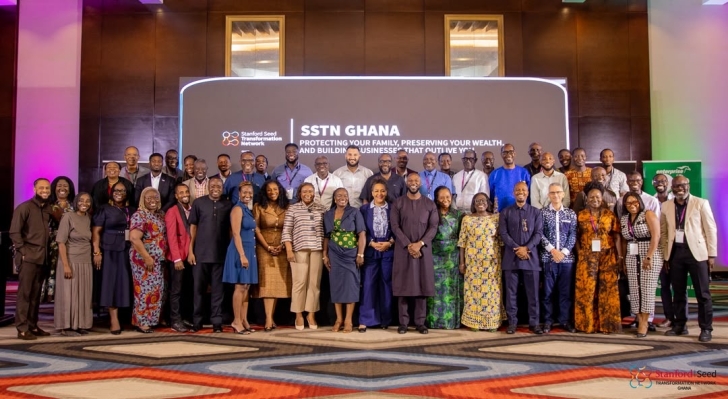
About 70 per cent of family businesses in Ghana risk collapsing within the first generation due to inadequate succession planning, weak governance structures and the absence of deliberate wealth management strategies, a business strategist and leadership coach, Theodore Albright, has warned.
Mr Albright, who is the Founder and Managing Consultant of The Family Office Africa, stated that the failure of businesses to establish effective succession arrangements threatened their survival and undermined their ability to contribute to long-term economic growth.
He stressed that corporate and family governance were critical to ensuring business continuity, as owners needed to put in place clear structures for transferring leadership, ownership and wealth to subsequent generations.
Speaking at a succession planning conference in Accra on November 18, Mr Albright urged family business owners to develop long-term visions anchored in shared values and effective wealth management strategies to sustain their enterprises across generations.
"About 70 per cent of businesses in Ghana die in the first generation. That is a strategy we must address. There is the need for business owners to establish structures that would ensure continuity beyond their founders.
“Corporate governance and family governance are two critical pillars that hold family businesses together,” he said.
Background
The annual conference, organised by the Stanford Seed Transformation Network (SSTN), brought together business leaders, entrepreneurs and industry experts to discuss strategies for ensuring the sustainability of family-owned businesses and protecting wealth across generations.
It was on the theme, “Succession planning and business continuity: Protecting your legacy/business.”
The event focused on the importance of effective succession arrangements, strong governance structures and leadership development in building businesses that could survive beyond their founders.
It also provided a platform for participants to share experiences and explore practical approaches to protecting family wealth, managing leadership transitions and strengthening business continuity.
Sustainable family businesses
Mr Albright explained that the capabilities required to establish a successful business were different from those needed to preserve and grow it across generations, making deliberate succession arrangements essential.
He said business owners must develop clear frameworks for transferring leadership, ownership and wealth while ensuring that the next generation had the competence to manage the enterprises.
He urged families to take inventory of their assets, properly value them and establish wealth management policies guided by their shared values and long-term investment objectives.
He advised business owners to assess the life cycles of their industries, products and services and adapt their business models to changing market conditions and technological developments.
Using the examples of Kodak and Blockbuster, he added that businesses that failed to embrace innovation risked becoming irrelevant, regardless of their previous market success.
Succession planning
The President of the Stanford Seed Transformation Network (SSNT), Prince Arkutu, said succession planning was not only essential for protecting family wealth but also critical to sustaining businesses, preserving jobs and supporting national economic growth.
He explained that the collapse of businesses following the departure of their founders resulted in the loss of livelihoods, investments, institutional knowledge and economic opportunities.
“Building a successful business is one thing, but building a business that can succeed without you is another thing,” he said
He urged entrepreneurs to establish institutions with strong systems, structures, governance and capable leadership.
Mr Arkutu, who is a second-generation business leader, added that entrepreneurs must evolve from personally managing every aspect of their businesses to building organisations where responsibilities could be delegated and operations sustained without their direct involvement.