


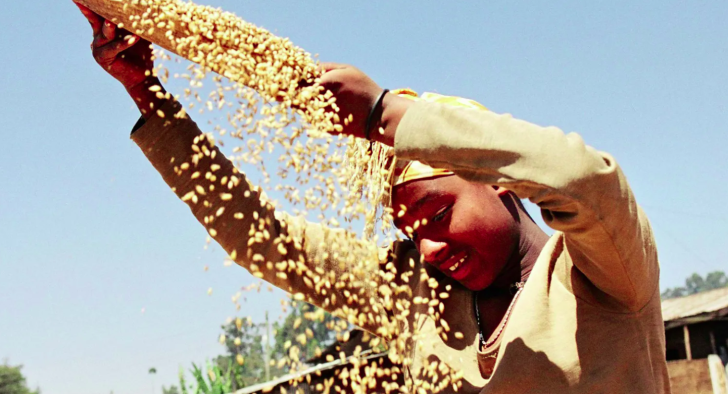
Rising temperatures and workplace heat stress could cost Ethiopia, Ghana and Senegal the equivalent of approximately 2.46 million full-time jobs and around US$67 billion in combined annual GDP losses by 2040, even under a low-emissions pathway, according to new studies by the International Labour Organization (ILO).
The research reveals that the economic and employment consequences of rising heat are already being felt and could intensify substantially in the coming decades.
By 2040, reduced working time caused by heat stress is projected to amount to approximately 1.78 million full-time jobs in Ethiopia, 550,000 in Ghana and 129,000 in Senegal.
Under the same pathway, combined annual GDP losses are projected at US$33.3 billion in Ethiopia, US$23.2 billion in Ghana and US$10.5 billion in Senegal, compared with the historical reference period.
The studies show that heat stress is not only a future risk. In 2023, rising workplace heat associated with climate change resulted in significant additional losses of working time and economic output compared with the historical baseline in all three countries.
Agriculture and construction are among the sectors most exposed because of the physical nature of the work and high levels of outdoor employment, but the impact extends well beyond these sectors, affecting manufacturing, transport, trade and services, as well as workers and enterprises in the informal economy.
Different economies, a shared challenge
The scale and distribution of the impact varies considerably between the three countries. In Ethiopia, more than one million additional full-time equivalent jobs were lost to workplace heat stress in 2023 compared with an average year during the historical reference period, with agriculture accounting for around three-quarters of those losses. By 2040, the equivalent of approximately 1.78 million full-time jobs could be lost under a low-emissions pathway.
In Ghana, workplace heat stress accounted for the equivalent of more than 345,000 additional full-time jobs lost in 2023, with agriculture representing around two-thirds of the total. By 2040, that figure could rise to around 550,000 full-time equivalent jobs under a low-emissions pathway. In Senegal, nearly 72,000 additional full-time equivalent jobs were lost in 2023, with the impact concentrated particularly in services and agriculture. By 2040, losses could reach the equivalent of approximately 129,000 full-time jobs.
“These findings make clear that heat stress is not only an environmental issue. It is already a jobs, health and economic issue. Governments, employers and workers need to act together, combining stronger occupational safety and health measures with social protection, climate adaptation and economic planning. Protecting people from heat means protecting livelihoods, enterprises and the resilience of our economies,” said Fanfan Rwanyindo Kayirangwa, ILO Regional Director for Africa.
Building resilience in the world of work
The studies identify practical measures that can reduce the impact of rising heat, including adjusting working hours to avoid the hottest periods of the day, introducing appropriate work-rest cycles, providing shade, hydration and cooling facilities, strengthening workplace heat monitoring and occupational safety and health standards, and improving awareness of the symptoms and risks of heat stress. The findings also point to the importance of social protection, particularly for workers in the informal economy who may be unable to reduce their working hours without losing essential income.
The Ethiopia, Ghana and Senegal studies form part of a six-country research initiative that also covers Lebanon, the Maldives and Sri Lanka. The studies were commissioned by the ILO with support from the Climate Vulnerable Forum and the Vulnerable 20 Finance Ministers, with funding provided through the CVF-V20 Joint Multi-Donor Fund. The research combines climate projections, labour market data and economic modelling to assess the current and future effects of workplace heat stress on productivity, employment and national economies.